


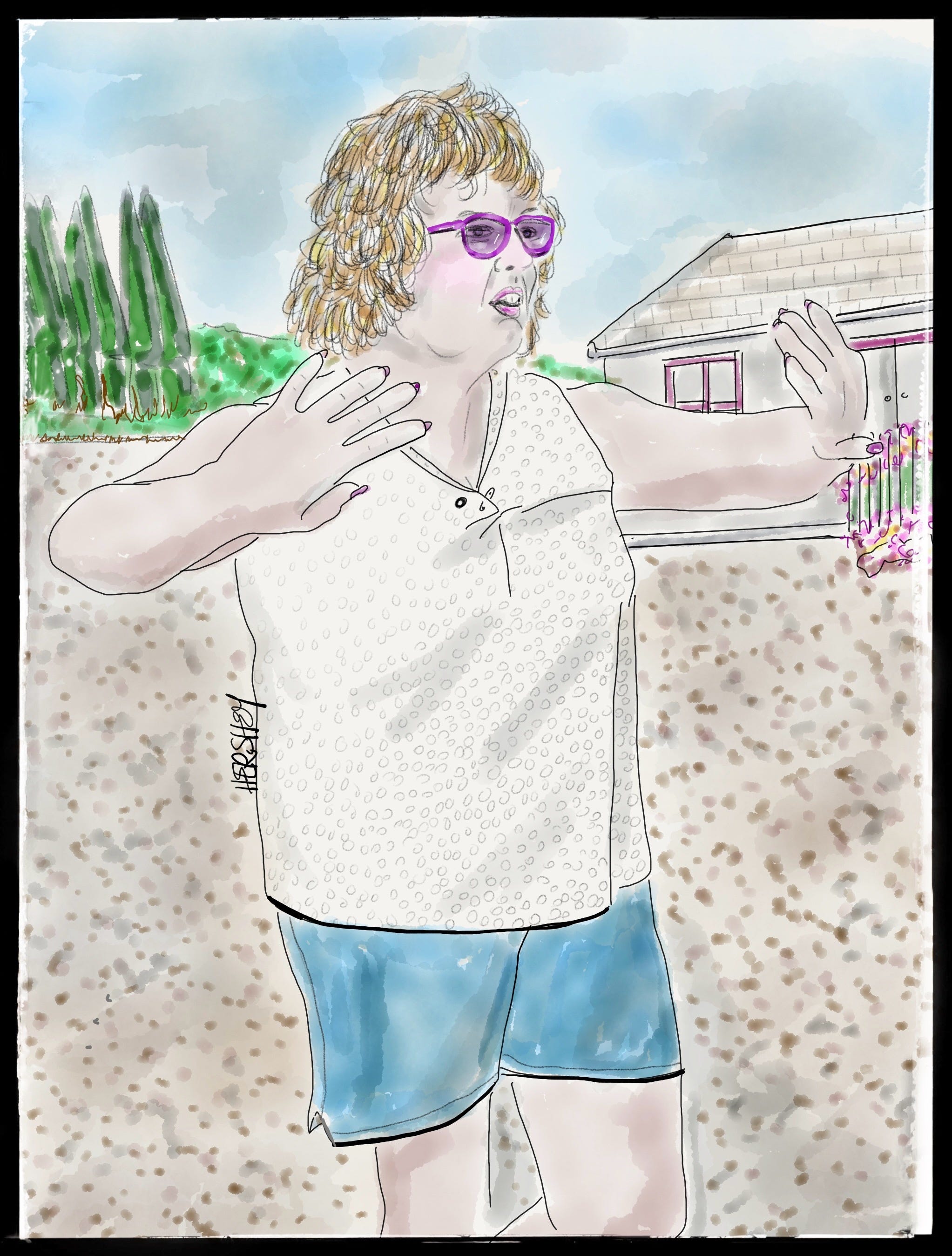
We met Shelley while biking along the Susquehanna River in Bradford County. She was tending her two-acre homestead from a riding mower with the focused efficiency of someone who knows every inch of her land. When we asked what it was like to live near fracking pads, she pointed toward her water supply. "My artesian well is overwhelmed with sulfur," she said. "We have to filter it now." Sulfur in Bradford County well water is complicated. The region's geology naturally produces hydrogen sulfide in certain aquifers, predating the gas industry by centuries. However, fracking can mobilize previously stable underground sulfur compounds, and Chesapeake Energy was repeatedly fined for contaminating local wells during the boom years. However, without pre- and post-drilling water testing, it is nearly impossible to prove whether Shelley's sulfur is geological bad luck or an industrial consequence. When asked if she saw any financial benefit from fracking, her expression shifted. "Oh yes. We call it mail money," she said with genuine pleasure. "It comes once a month. They pay us for the gas they draw from beneath our property, which lately has averaged about a thousand dollars a month. We don't know exactly how they calculate it, but we're happy to have it." Royalty payments are tied to the volume of gas extracted from a landowner's mineral rights, even if there is no surface equipment on the property. Because mineral rights can be unbundled from surface land, owners can sell their homes while retaining the checks. Across Bradford County, mail money has been a quiet but powerful factor in how residents weigh the costs of the natural gas industry. The money arrives reliably even as the heavy rigs move on, serving as a monthly reminder that the ground beneath these hills isn't played out yet.
“Attention is the rarest and purest form of generosity."
- Simone Weil
You may have seen the film Don't Look Up. Two scientists discover a comet heading straight for earth and spend the rest of the movie trying to get anyone to pay attention long enough to care. The news anchors pivot to a celebrity breakup. The president checks her polling. The social media feeds scroll on. The scientists cannot make the world hold still. When the film came out in 2021, a lot of people laughed in recognition. That recognition should give us all pause, because the comet in that film was never really a comet. What the film understood, and what we keep coming back to, is that attention itself is the thing worth protecting. Paying it, giving it, passing it along.
Riding bicycles through northern Pennsylvania forces us into a slow, intimate negotiation with the landscape. The hills don't peak in jagged teeth; they roll across the horizon like massive giants. The rivers run over gray boulders and fractured shale, amber-colored, the dark shade of steeped tea. We followed the Susquehanna and the Chemung for three days, from a hillside west of Dushore in Sullivan County north through New Albany, Towanda, Wyalusing, historic French Azilum and Wysox, crossing into New York briefly at Elmira before ending in Sayre, where Bradford County meets the river and the state line. Along the way we rolled past a field full of old Case tractors, lined up in the June sun like a congregation waiting for a sermon, glistening and restored to perfection that is rare to find nowadays. A little further on, a meadow spilled pink and yellow wildflowers across a hillside that would have stopped anyone's breath. We stopped anyway. That is one of the privileges of traveling by bicycle: the world can actually get your attention.
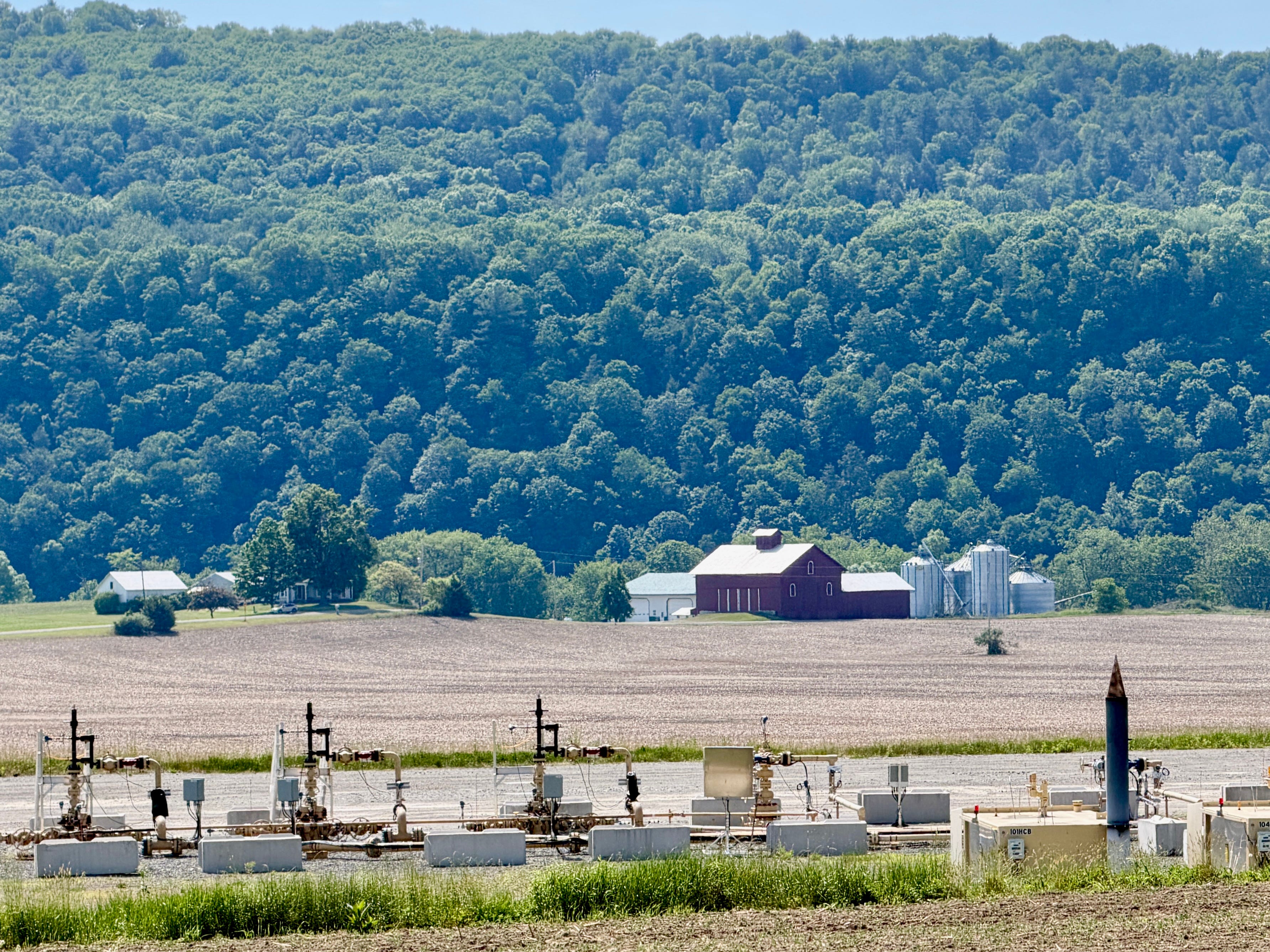
Then came the fracking pads. Some are set back modestly behind the tree line, so neat as to be almost unnoticeable, and others appear as angry-looking terraces of piping that scar a hillside, or a tangle of pipes and tanks dropped in the middle of a cow pasture. Down in the valleys, beside modest houses and businesses surrounded by crushed stone fighting against the local grasses, yellow excavators and rusted dump trucks sit in the tall grass like sleeping beasts. Just outside New Albany, we passed a large anthracite culm pile easily mistakable for a hill, going gently green at the edges, as if the land were trying to forget what happened there. It is probably still leaching a cocktail of pollutants into local water supplies. The terrain here absorbs the residue of human ambition slowly. When it finally gets the chance, it takes it back: grasses and wildflowers reclaim hillsides, kudzu and wild grapevine climb rotting porches, saplings push through floorboards, a green devouring that begins the moment human industry moves on.
This part of Pennsylvania has been absorbing that ambition for a long time. In the late 1800s, coal mining ruled the ridges, timber was harvested off the slopes, and farming spread through the lowlands. It was an unusual fabric of potentially competing industries, and for a time local economies thrived. The ghost town of Barclay, just over the ridge in Bradford County, once held thousands of people with stores, churches, and schools. It is now a cemetery in the woods, the rest of it quietly reclaimed by state game lands.
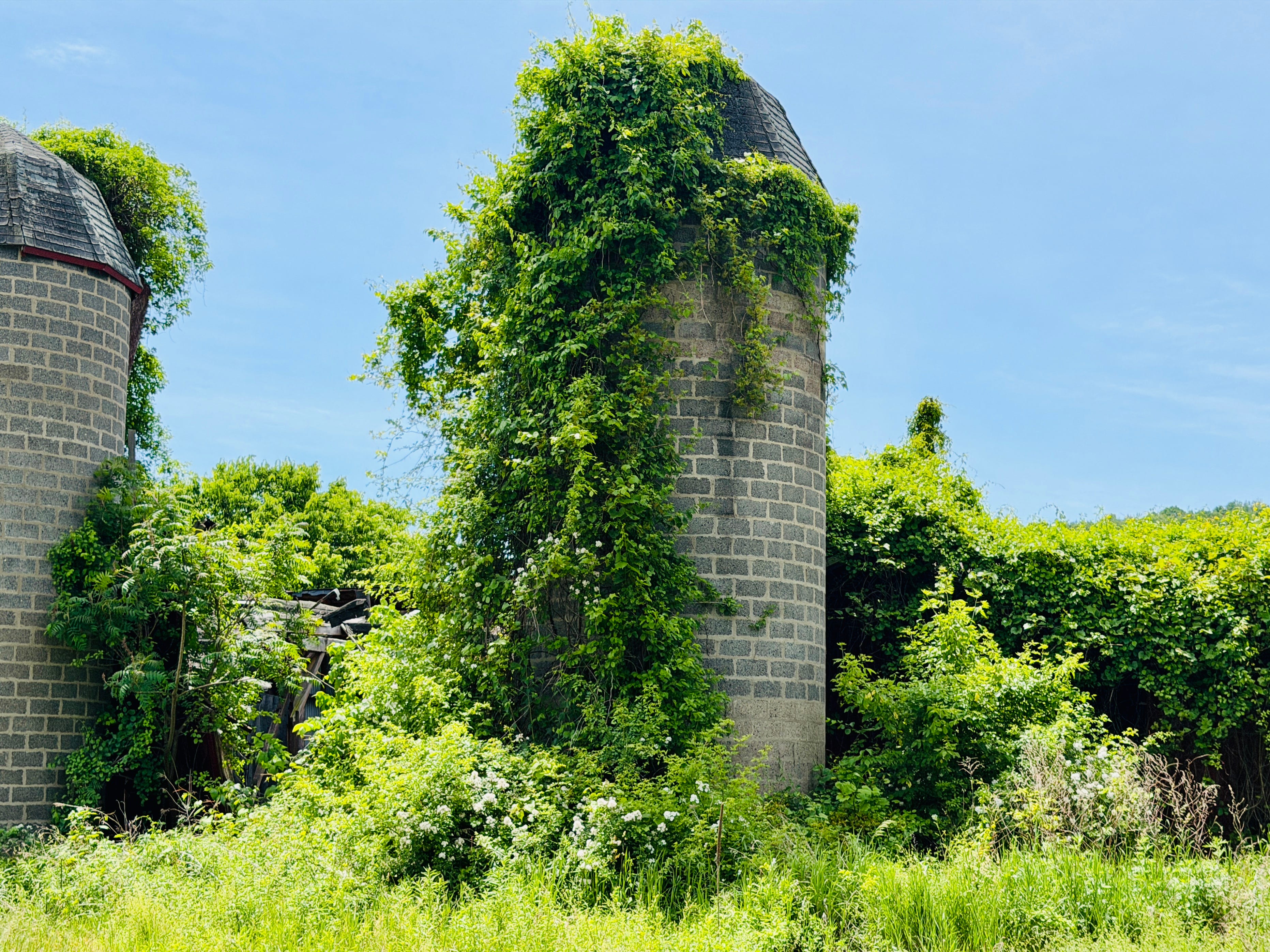
These silos near Wyalusing, Pennsylvania, along the Susquehanna have been waiting long enough. The vines do not hurry, and they do not need to. The land has all the time in the world. It knows, with a certainty that no lease agreement or permit application can match, that it will eventually reclaim everything.
When the Marcellus Shale gas boom arrived in 2008, Bradford County became one of the most heavily drilled areas in the state. Towns all along the Susquehanna, including Towanda, Wysox, Wyalusing, and Sayre, transformed almost overnight. They went from quiet river communities, where one local said you could take a nap in the middle of the road, to bustling hubs where trucks ran around the clock. Water wells near Wyalusing turned smelly and often undrinkable, but royalties flowed and unemployment stayed low through the recession. County officials called fracking a blessing.
By 2016, Chesapeake Energy had stopped drilling new wells in the county. The man-camps emptied, the storefronts followed, and some landowners who had signed their mineral rights away cheaply watched neighbors who had held out turn into millionaires, while their own royalty checks shrank to a few hundred dollars. Royalty payments still flow to some landowners, a quiet ongoing benefit that the bust did not entirely erase. But a 2021 legal settlement paid some Bradford County landowners as little as $367 for years of disputed royalties. Bradford County's own historian noted, without bitterness, that the gas industry was basically the same as the coal and timber industries before it, just with more modern technology. The land gave what it had. The companies moved on. The people stayed.
Now, even before the fracking dust has fully settled, the next wave of new technology is arriving. Just down the Susquehanna from Towanda, a company called Klondike Digital Infrastructure is planning a hyperscale data center on a former LNG site in Wyalusing, powered by a new 218-megawatt gas plant currently under state permit review. A few miles away in Wysox, a cryptocurrency mining operation has proposed planting 27 industrial computing containers on a small parcel on a beautiful and bucolic bend of the river. Cryptocurrency mining generates significant cooling noise, and the company apparently anticipated the problem: it bought up most of the neighboring houses, paying locals six or seven times market value by one account. The sellers called it "retirement money." Pennsylvania now has more than 50 data centers being proposed, planned, or under construction statewide. The pattern Bradford County knows so well is still writing itself.
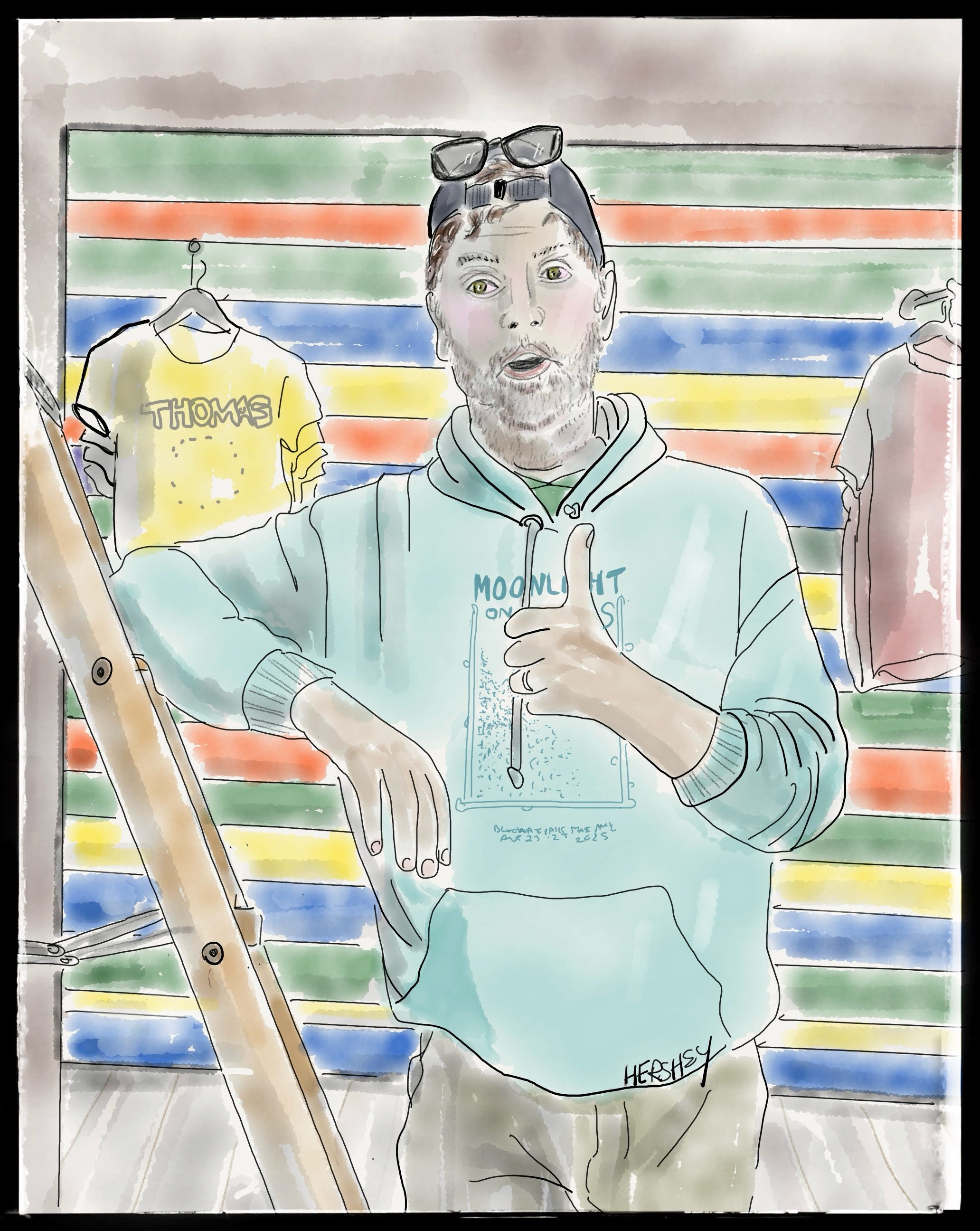
We met Robby McClumsy at his store on the main street in Thomas, West Virginia. He was showing us his newly expanded space, moving through it with the easy pride of someone who built something from nothing and knows its worth. Three years ago, McClumsy was a small-town shop. Today it is a national brand, shipping hats and t-shirts across the country to customers who found him the way most people find things these days: through a screen. Robby has built an Instagram following of more than 19,000 (@mcclumsywv) the old-fashioned way, by showing up consistently, being genuinely himself, and intuitively understanding what the attention economy rewards. He doesn't game the algorithm so much as embody it: specific, warm, relentlessly local, and impossible not to like. Watch thirty seconds of his content and you will instantly understand why a tiny town in West Virginia now has a national fanbase. What struck us most, though, is how he balances that digital reach with a fierce commitment to the physical place he calls home. Robby is actively involved in Tucker County's opposition to the proposed data center campus. Having built his livelihood on the tools of the attention economy, he is now using those same tools to fight for the landscape and community that shaped him. There is something quietly instructive in that combination: a man who understands better than most how digital attention works, choosing to anchor his own in something that actually matters.
Readers of our previous post, Pushing against Goliath: Biking NE West Virginia, Part One, may be wondering why Part Two hasn't appeared yet. The short answer is that the story isn't finished. The court case filed by Tucker United is still working its way through a compromised judicial system, while conversations between county officials, local residents, and the data center development team are ongoing. Simultaneously, the governor and West Virginia legislature show little sign of backing away from their desire to override the will of local communities. Some stories need more time to play out, and this is one of them. West Virginia currently has only 9 large-scale data center projects in various stages of planning, compared to more than 50 in Pennsylvania, yet Tucker County's fight has drawn little national attention.
Data centers are expanding into nearly every corner of the country. With 710 currently operating in the U.S. and over 1,000 more planned or under construction, the infrastructure for the attention economy has itself become a kind of extraction industry, sweeping across the landscape in search of cheap land, cheap power, and abundant water. Earlier this year, we covered this trend in the Deep South, tracking AI development through Mississippi and Louisiana as cooling towers rose next to cotton fields and crawfish ponds. The geography is different here in Pennsylvania, but the logic remains the same.
The question not being asked loudly enough is whether the data center boom will follow the same arc as the coal and gas booms before it. When the economics shift, as they always do, the servers will not need the town. And here is the strange irony woven into all of this: the data centers are being built to feed the very attention economy whose infrastructure now scars the same landscapes that coal and gas left behind.
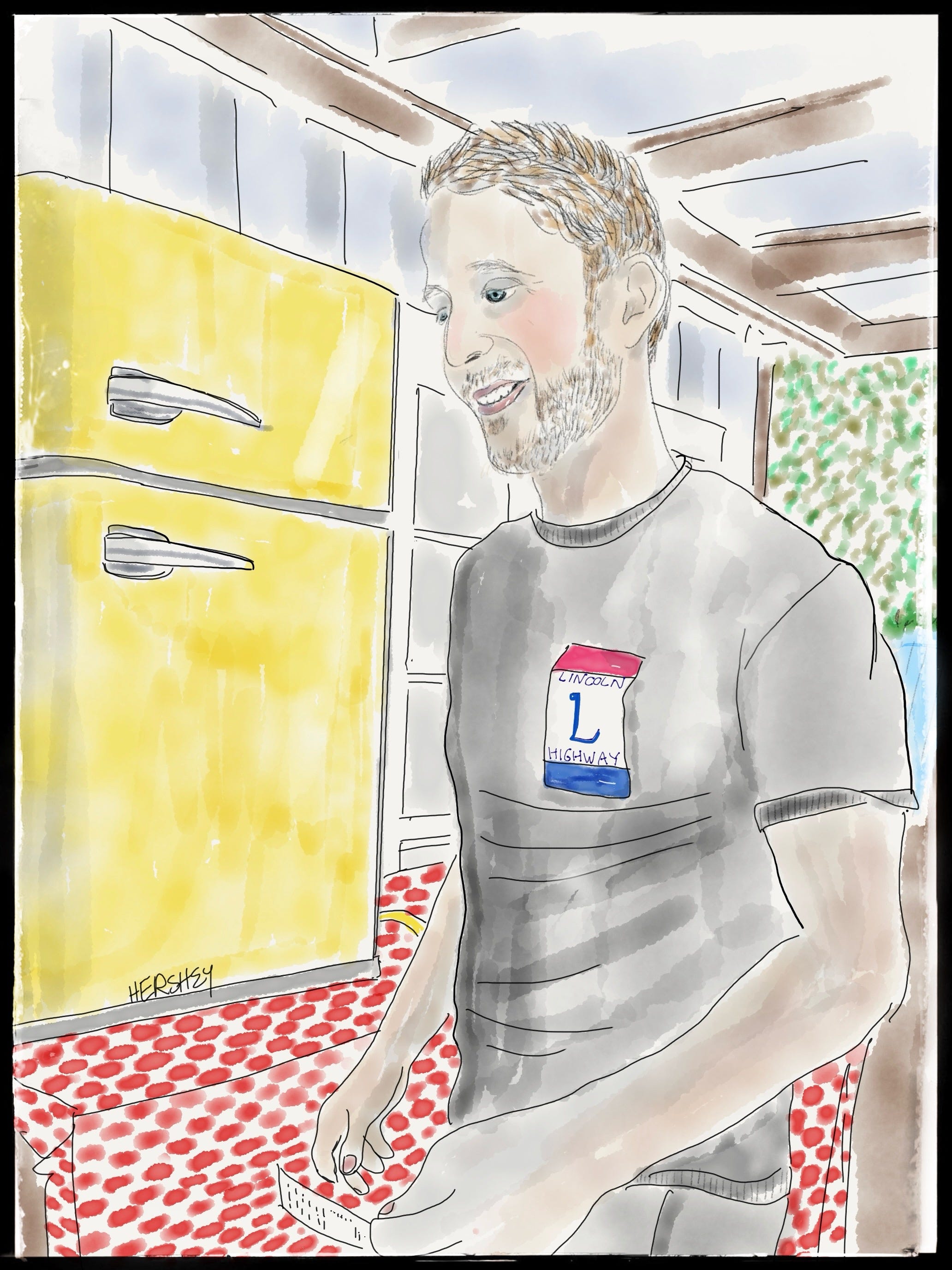
We met Kyle in Manns Choice, Pennsylvania, where he and his partner Avery have committed the next two years to restoring their newly acquired Lincoln Motor Court, a row of historic, one-room cabins along the old Lincoln Highway (Route 30). Each cabin includes beautifully designed coffee cups bearing the motel's logo and a book on the highway's history, both small gestures that show how Kyle thinks. He has built a website called lincolnmotorcourt.com, and they hope to organize retreats for small nonprofits as they quietly construct a brand around a place most travelers would pass without a second glance. There is a deep familiarity in what he is doing: building something specific and unhurried in a landscape the modern economy has largely bypassed, betting that the right people will find it if you give them a reason to look. We have been trying to do something similar with carbonstories for years, and it was good to be reminded that the instinct is not as solitary as it sometimes feels.
The economist Herbert Simon identified the core problem of an attention economy more than fifty years ago: a flood of information creates a poverty of attention. The platforms built on that flood reward the fast and the vivid. Long, careful writing about what is quietly happening to the land and water in places like Tucker County and Bradford County does not easily compete with whatever just broke in the last ten minutes. A recent Reuters Institute study found that weekly climate news consumption has been falling since 2023, not because people stopped caring, but because they are tired, overwhelmed, and running low on bandwidth. The comet in Don't Look Up is the same comet it has always been. The comet is still coming. We just keep looking away.
I started carbonstories eleven years ago because I believed that a story told slowly, from a bicycle seat, through specific places and specific people, can do something a headline cannot. When Jenny joined in 2020, her drawings changed the work in ways neither of us quite expected. They gave it a warmth and a human scale that photographs don’t always reach. We don’t use a paywall. We believe the work itself is the value, the same way we believe the journey is the value, and both are offered freely.
Which brings us to our ask. If a carbonstories post moves you, please click the like button at the end. Just like a full restaurant, evidence that others are reading draws more readers. And the most helpful thing you can do is share the article. On Substack, there is a share button at the bottom of every post; you can send it directly to someone by email or text, or post it to your own social feeds. You can also restack a post, which lifts it back to the top of your own readers’ feeds and introduces it to people who haven’t found us yet. A comment, even a short one, inspires others to engage.
In an economy engineered to scatter attention, these small gestures are the signals that help other readers find their way to us, the way a lit window helps someone find a house on a dark road. Pay attention. Give it freely. Pass it along.
The culm pile outside Dushore will still be there tomorrow. So will we.
Stay vigilant! Thanks for reading. If you haven’t done so, please subscribe to this blog to follow our next biking trip.
This newsletter was written by Michael Chase, with drawings by Jenny Hershey. Unless otherwise noted, all material is the copyrighted property of the authors, including all photographs and drawings. Jennifer Hershey’s drawings can be enjoyed on Instagram at deeofo.
Sources
Don’t Look Up, Adam McKay, Netflix, 2021: https://www.pbs.org/newshour/show/in-dont-look-up-director-adam-mckay-makes-allegorical-plea-to-follow-climate-science
Simone Weil, Waiting for God, 1951: https://www.amazon.com/Waiting-God-Simone-Weil/dp/0061300967
Bureau of Labor Statistics: https://www.bls.gov/opub/mlr/2014/article/the-marcellus-shale-gas-boom-in-pennsylvania.htm
CNN Money: https://money.cnn.com/2010/10/07/news/economy/penn_boomtown/index.htm
NPR State Impact Pennsylvania: https://stateimpact.npr.org/pennsylvania/2012/06/21/chesapeake-to-pay-1-6-million-for-contaminating-water-wells-in-bradford-county/
Proceedings of the National Academy of Sciences: https://www.pnas.org/doi/10.1073/pnas.1420279112
Penn State Extension, Timothy W. Kelsey et al.: https://aese.psu.edu/research/centers/cecd/archives/marcellus/economic-impacts-of-marcellus-shale-in-bradford-county-employment-and-income-in-2010
PA Environment Digest: http://paenvironmentdaily.blogspot.com/2025/07/dep-invites-comments-on-air-quality.html
WHYY: https://whyy.org/articles/pennsylvania-governor-josh-shapiro-data-center-development-plan/
carbonstories, Michael Chase and Jenny Hershey: https://carbonstories.substack.com/p/slingshots-against-goliath-in-the
Cleanview, updated June 2026: https://cleanview.co/data-centers/us
Progressive Policy Institute: https://www.progressivepolicy.org/831-data-centers-are-under-construction-in-the-united-states/
Herbert Simon, Carnegie Mellon University Digital Collections: https://digitalcollections.library.cmu.edu/awweb/awarchive?type=file&item=33748
Reuters Institute, Dr. Waqas Ejaz et al.: https://reutersinstitute.politics.ox.ac.uk/climate-change-and-news-audiences-report-2025-analysis-news-use-and-attitudes-eight-countries
The writings & the drawings give us an important insight into the mood & issues of our country. You describe situations & circumstances affecting so many people (& parts of our country) that we may not have been previously aware of…thank you, Michael & Jenny!